Have you ever entered a space where you felt that something was missing?

Not a specific piece of furniture. But rather the feeling that the space does not reflect the person who lives there. As if the furniture does not suit the personality of the place. As if some fundamental harmony is missing.

In a world where mass-produced items dominate the market, unique furniture offers something completely different: an opportunity to create something truly unique that perfectly matches individual tastes, needs, and lifestyles.

But what happens when the promise of "unique furniture" is not fulfilled?

The harmony of wood and water
The true meaning of uniqueness

In Hungary, more and more carpentry workshops advertise that they make custom furniture. And indeed, many of them do. But there is a critical difference between someone being able to make a custom-sized cabinet and actually being able to realize the vision that you and your interior designer have imagined.

Because uniqueness is not simply a question of size.

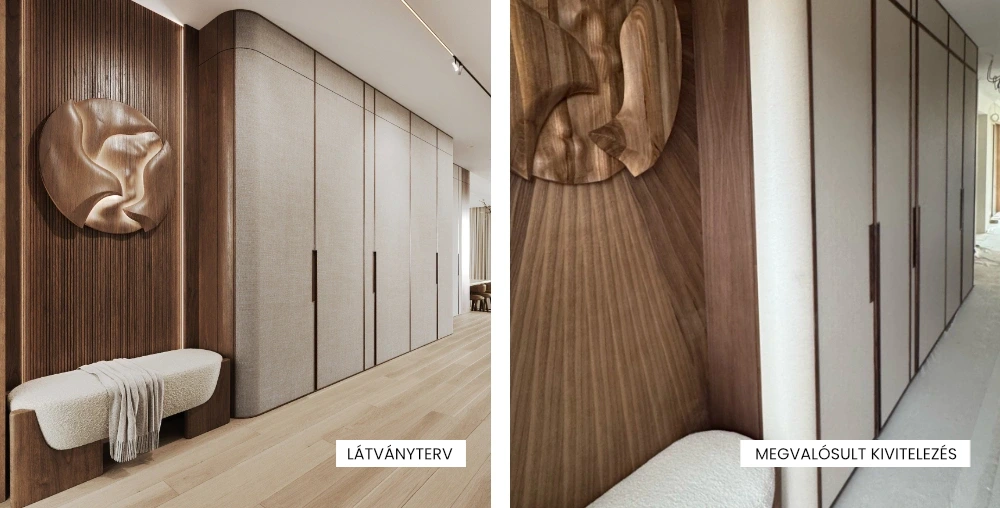
Uniqueness begins when the characteristics of a space are special. When an interior designer plans a solution that has never existed before. When you want to see materials, shapes, and constructions that go beyond standard solutions.

And this is where paths diverge.

When a dream becomes a compromise

Imagine this situation:

You spend months finding the perfect interior designer. Together, you shape your vision. The plans are impressive. Every detail has been thought through. The materials have been selected—premium, durable, beautiful. The design perfectly expresses you and your life.

Then the carpenter arrives. And he starts saying:

"This material is too difficult to source..."

"It would be complicated to install the hidden lighting this way..."

"We can't achieve this curved surface with such precision..."

"There is an alternative that is similar but cheaper..."

And suddenly you find yourself making compromises. Not because your budget won't allow it. Not because you've changed your mind. But because the contractor can't deliver what you've dreamed of..

Invisible differences that become visible

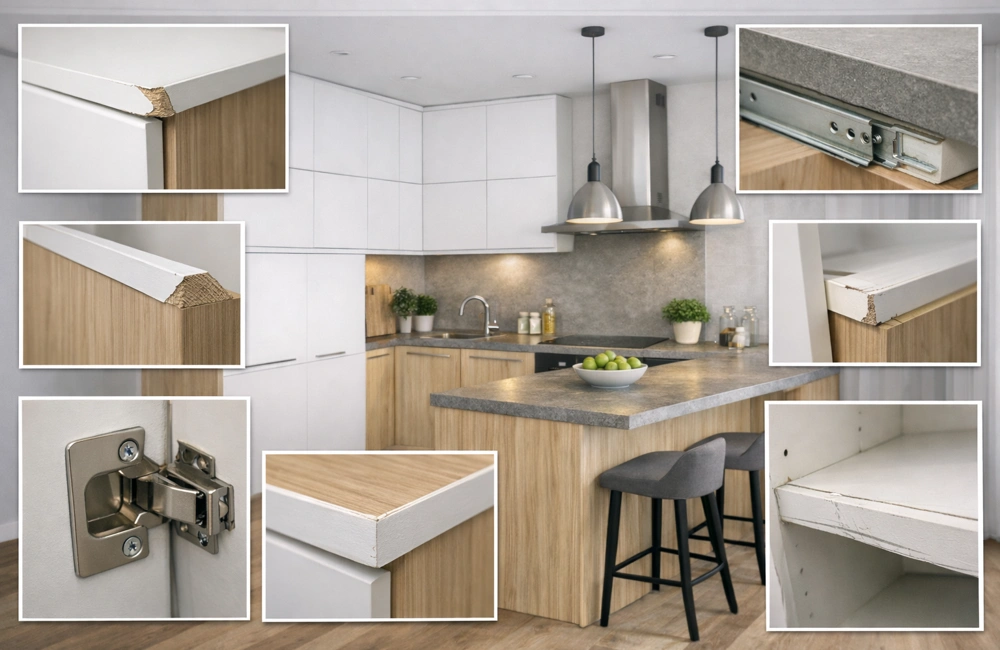
There is something even more dangerous than obviously poor quality: seemingly good quality that quickly deteriorates.

When a carpenter says "custom-made," but in practice:

  • Cheaper materials, such as chipboard, are used for the interior frames, "because you can't see them anyway."
  • The drawer rails are not of the specified quality because "these will do."
  • Instead of a curved solution, something completely different is used.
  • Painted colored fronts, but when opened, snow-white foil is revealed.
  • How does one interpret the raison d'être of the fitting?
  • The elaborate joints, which can take 10 minutes for a single piece, but also a whole day's work.

These seem like small things. At first glance, they may not even be visible.

But in two or three years, they will all be visible.

The drawer runners start to stick. The hinges become loose. The veneer discolors. The foil peels off. The furniture sags due to poor design and poor-quality materials.

And when you point out the problem? "That's normal wear and tear..."

The question of problem-solving ability

The real challenge is not in making standard cabinets. Most carpenters are excellent at making well-designed, traditional constructions from standard materials.

The real challenge arises when:

  • The space is irregular
  • The design includes shapes that are not straight
  • Special material combinations
  • The integration of functions requires complex solutions
  • The idea has not yet been implemented in Hungary

And this is where it becomes clear who has the experience, creativity, and technological background.

Not because carpenters are not hard-working or dedicated. But because truly unique projects require technical knowledge, experience, equipment, and problem-solving skills that are rare.

There are few workshops in Hungary that are truly capable of implementing complex, unique designs—without material substitutions, simplifications, or compromises.

True value: personalization, quality, long-term thinking
Why do people choose bespoke furniture?
Personalization and exclusivity

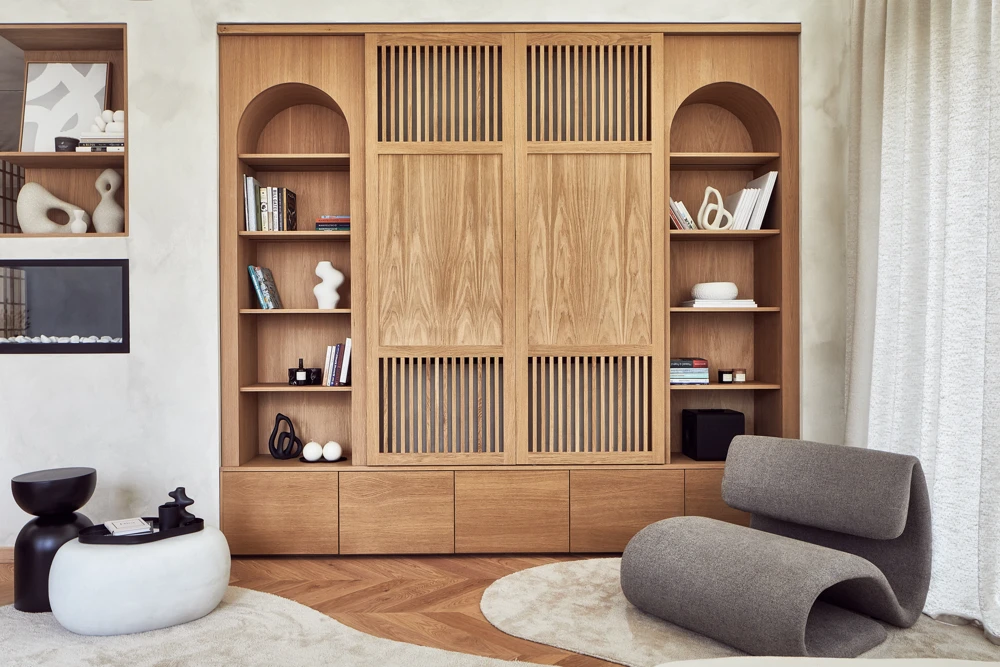
Because they want pieces that reflect their individuality. A handmade dining table that gets exactly the woodworking and surface treatment you envisioned. A modular storage system that fits perfectly with non-standard wall sizes. Furniture that makes your space unique and intentional.

Quality and durability

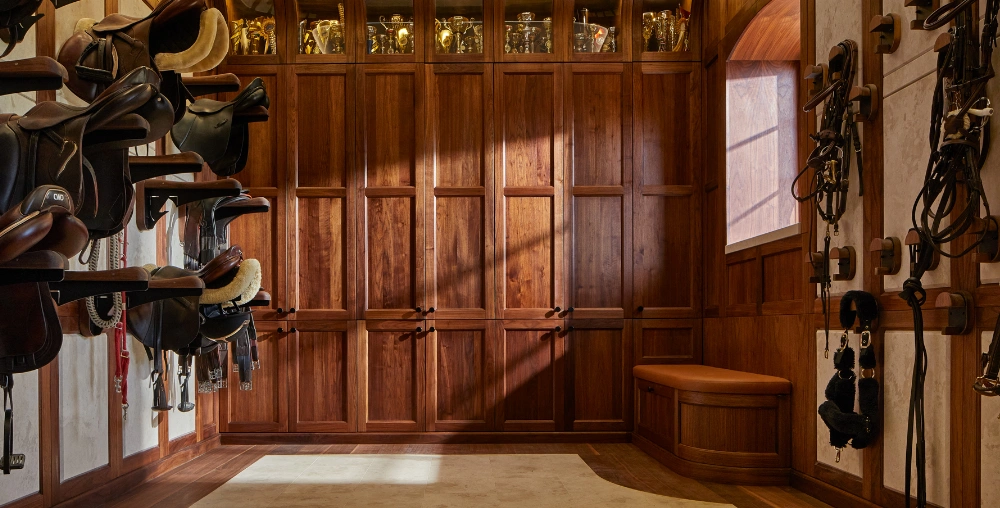
Because truly unique furniture—made from excellent materials and outstanding craftsmanship—is a long-term investment. These are pieces that will retain their beauty and functionality for decades. They don't need to be replaced after five years. They can accompany the family for generations.

Sustainability and ethical sourcing

Because more and more people are looking for environmentally conscious solutions. Recycled wood, eco-friendly treatments, local sourcing—these are no longer just slogans, but real values for those who are thinking about the future.

Functionality and use of space

Because not all spaces are standard, and not all needs are typical. Custom furniture allows for smart, space-saving solutions, especially when a special layout or use is required.

The really important questions you should always ask:

When choosing a carpentry workshop, don't just ask if they "make custom furniture."

Instead, ask:

  • What projects have they worked on that required non-standard solutions? Show me the details.
  • Have they worked on designs that required them to solve complex design challenges?
  • What materials do they use and where do they come from? Is it possible to insist on the planned materials?
  • What happens if something does not turn out as planned? Do they have a solution strategy? How do they usually solve such situations?
  • Can they provide references for projects of similar complexity?
  • How and in what ways can we follow the progress of the project?

What if the answers are not entirely convincing? Don't settle for less.

Because your home—or your business space—is not an experiment. It's where you spend every day. It reflects who you are. It's where you welcome your guests, clients, and family.

True luxury isn't about the label

Luxury is not about how much we spend.

Luxury is about getting exactly what we imagined. And ten years later, it is just as beautiful as when we first saw it.

Luxury is about entering a space and not feeling that "this is good," but rather that "this is perfectly mine.".

This does not happen by itself. It does not come from catalogs. It does not come from compromises, substitutions, or "similar" solutions.

It can only come to life if we find someone who truly understands and knows what it means to create unique furniture—with knowledge of materials, technical expertise, and the problem-solving skills that turn visions into reality.

Because in the end, what matters is whether we live in a space that accurately reflects who we are, where we feel completely at home, and where we did not get bogged down in a lot of unresolved issues or compromises during the implementation process.

MW Design © 2026 Minden jog fenntartva
MW Design © 2026
All rights reserved
Scroll to Top